This is a talk I gave at The Conference, Malmo, August 2024, outlining some of the motivating thoughts behind The Kardashev Street Project.
While far from a manifesto, it sets out a direction of inquiry… in around 20mins.
You can watch it here on The Conference website.
The talk starts with a clip of the Sesame Street theme, that I’ve mangled into… Kardashev Street. This amuses me greatly, but of course anyone under 30 or not from the UK/USA stares blankly at me while this plays.
After which… we begin.

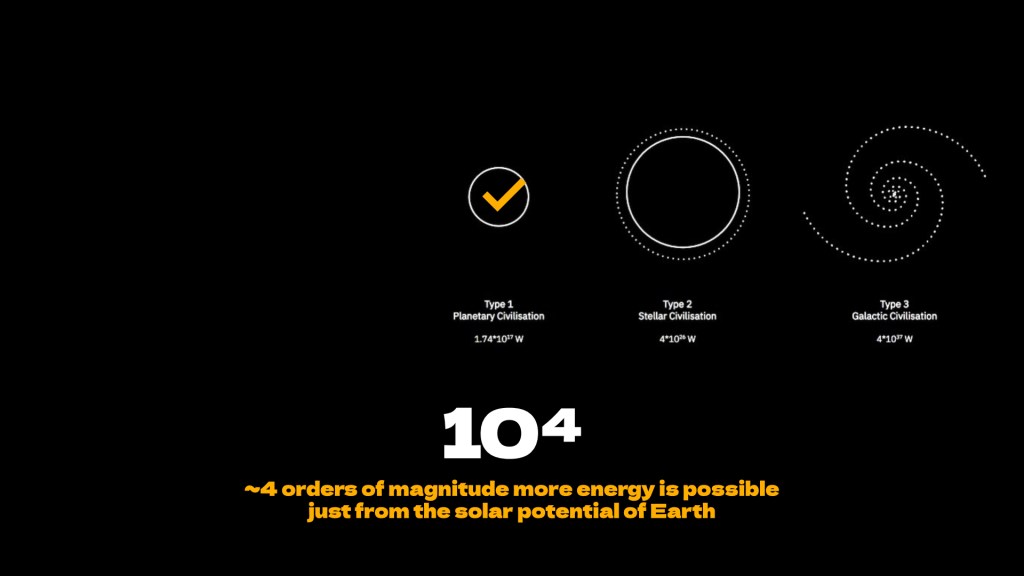
In 1964 a physicist named Nikolai Kardashev proposed a speculative scale or typology of civilisations, based on their ability to harness energy.
It’s often used in science fiction to explore future or alien civilisations that have achieved incredible things beyond what we have so far…
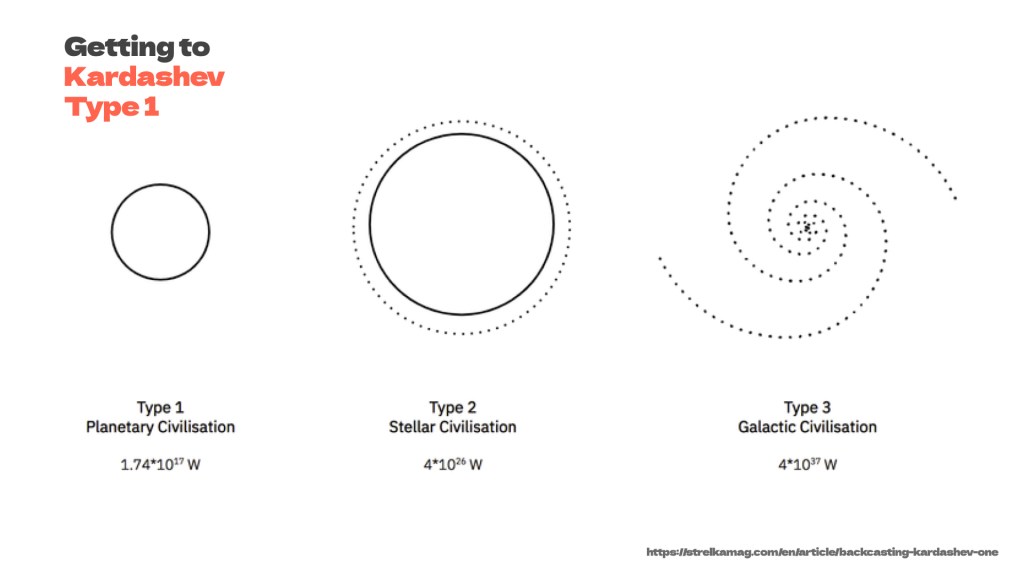
A Type I civilization is usually defined as one that can harness all the energy that reaches its home planet from its parent star.
Type 2s can capture *all* the energy from their home star by building something like a Dyson sphere around it – and Type3? Well… 🤯
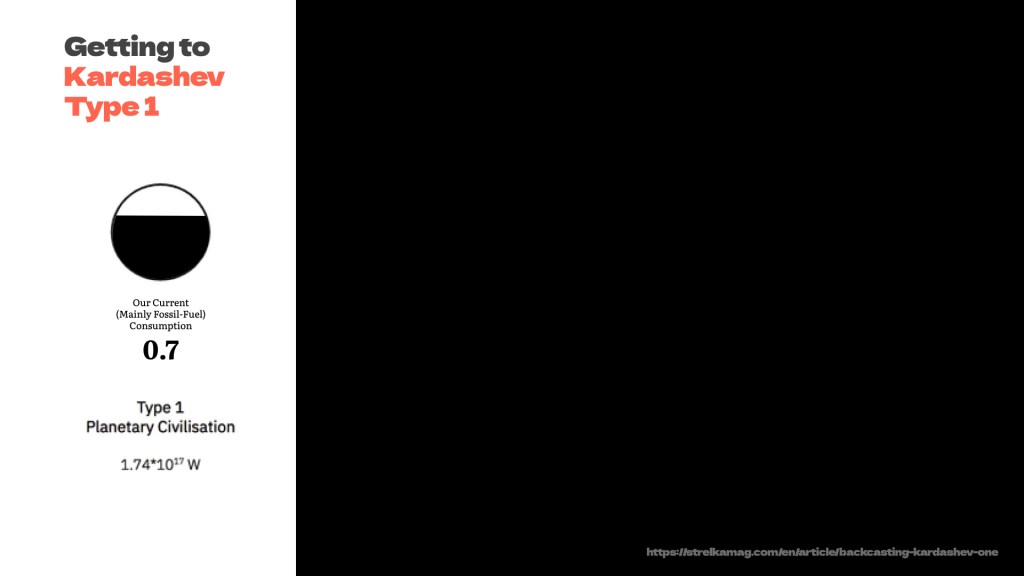
Right now, we are reckoned to be at 0.7 on the kardashev scale, based on our energy consumption.
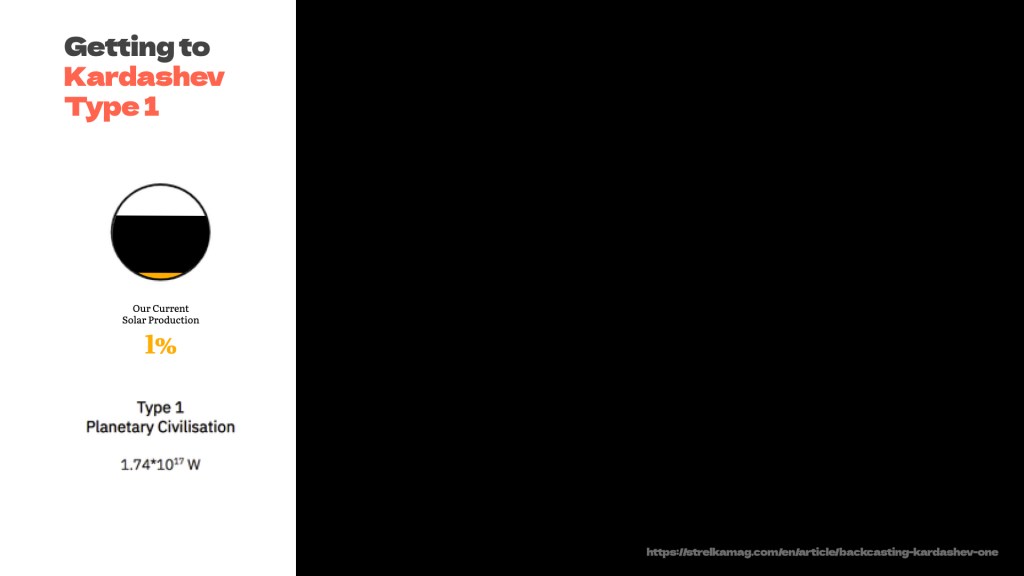
Our current solar production sit at about 1% of our energy consumption.
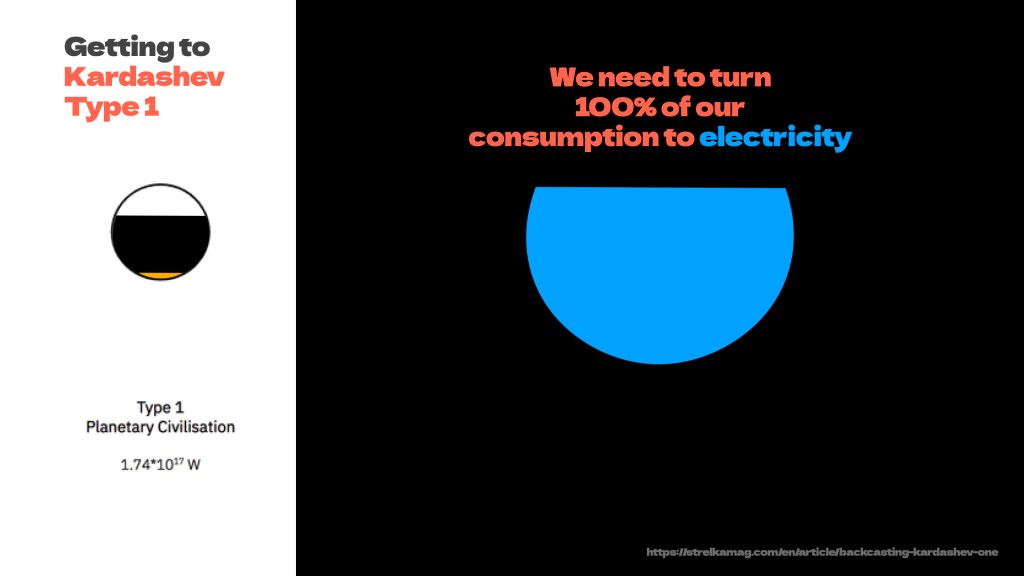
For us to have a shot at a livable future we know we need to make changes.
Many of you will know this already of course but – the Tl;dr – we need to turn as much of our energy consumption as possible to electricity…
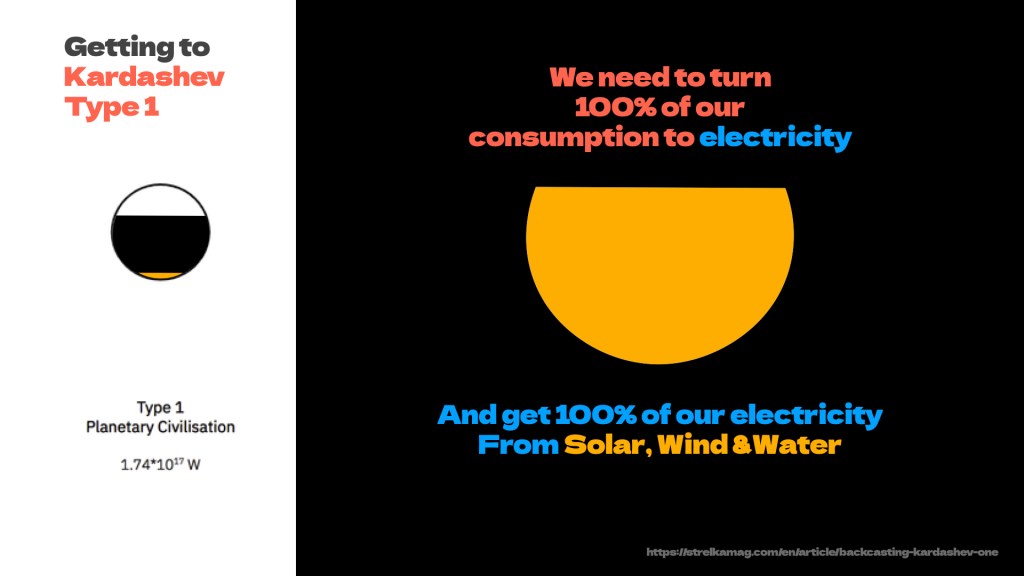
And we need to get that 100% produced with renewable sources – solar, wind and water.
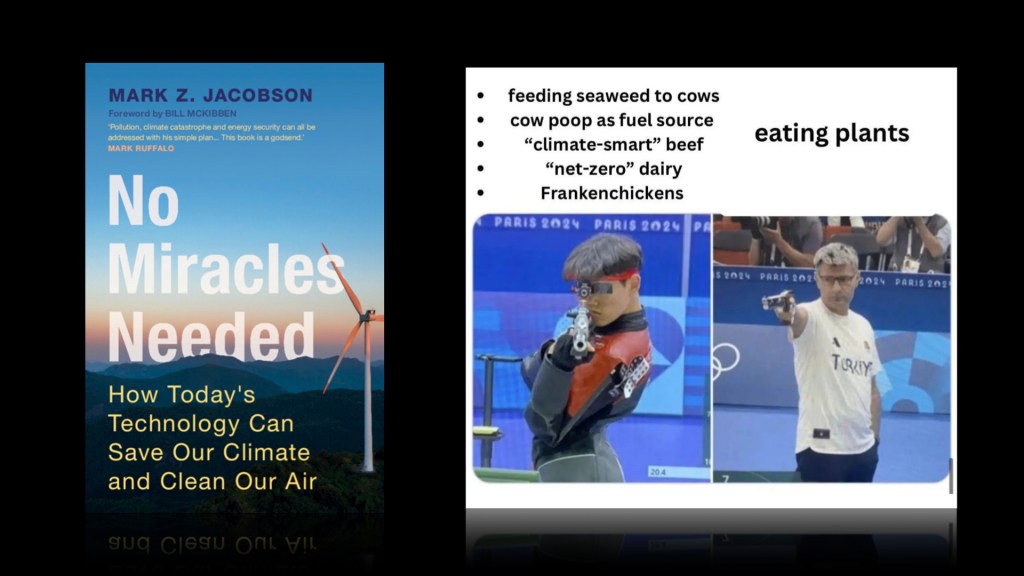
There may well be a role for more advanced technologies, and goodness I’d love us to have nuclear fusion – but we already have what we need, we just need to build it.
Wind, Water, Solar – plus storage (and software) can take us there.
But more on that later.
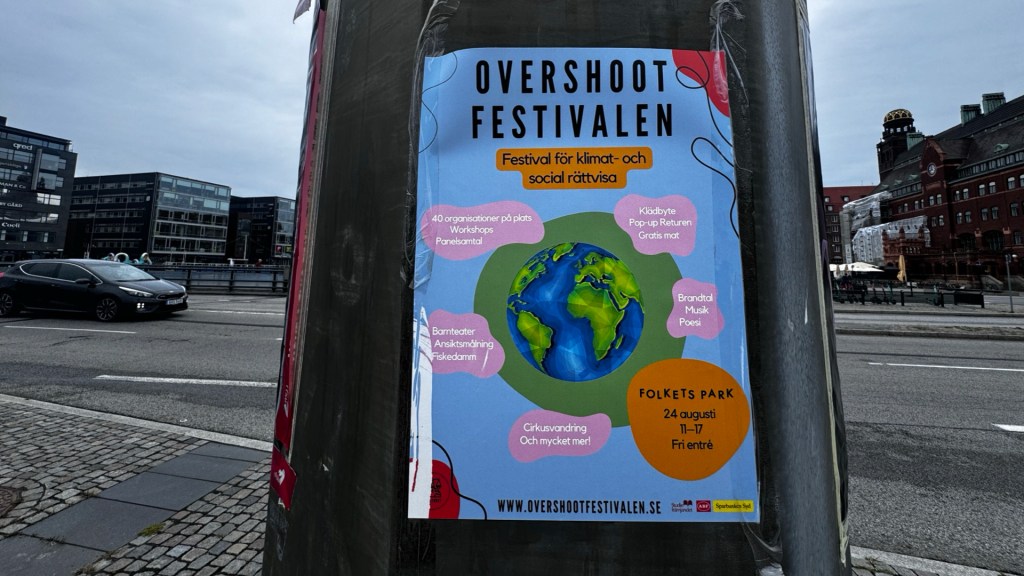
I saw this when I arrived in Malmo on Friday [August 23rd, 2024]
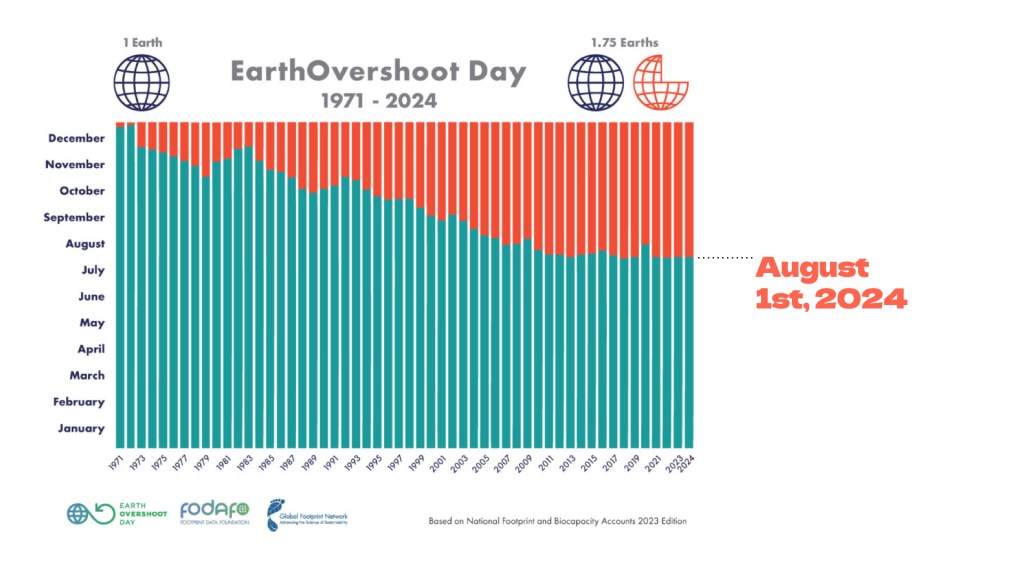
Earth Overshoot Day is, again, a concept folks in this room are probably aware of.
It’s a way of visualising our overuse of the Earth’s resources by calculating the day in the year that we pass beyond a boundary of it’s assumed carrying capacity
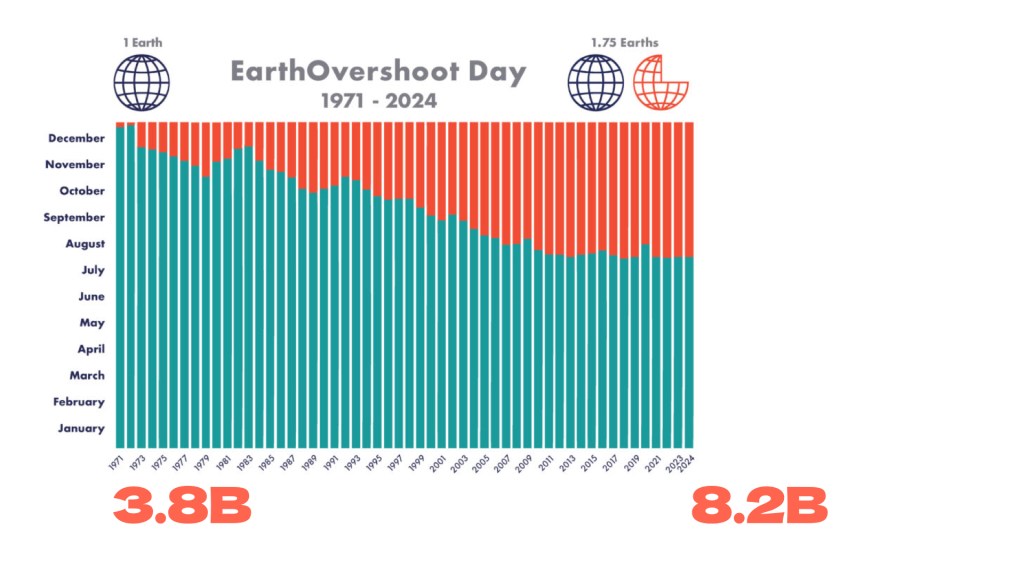
One thing I found intriguing about this visual though was to match it against population growth estimates since 1971 (I was born in 1972…).
The number of people on the earth has more than doubled in this time period, but the date of overshoot is starting to flatten?
Is this reason for optimism?
How might we reverse it, while perhaps allowing 10B people to flourish?
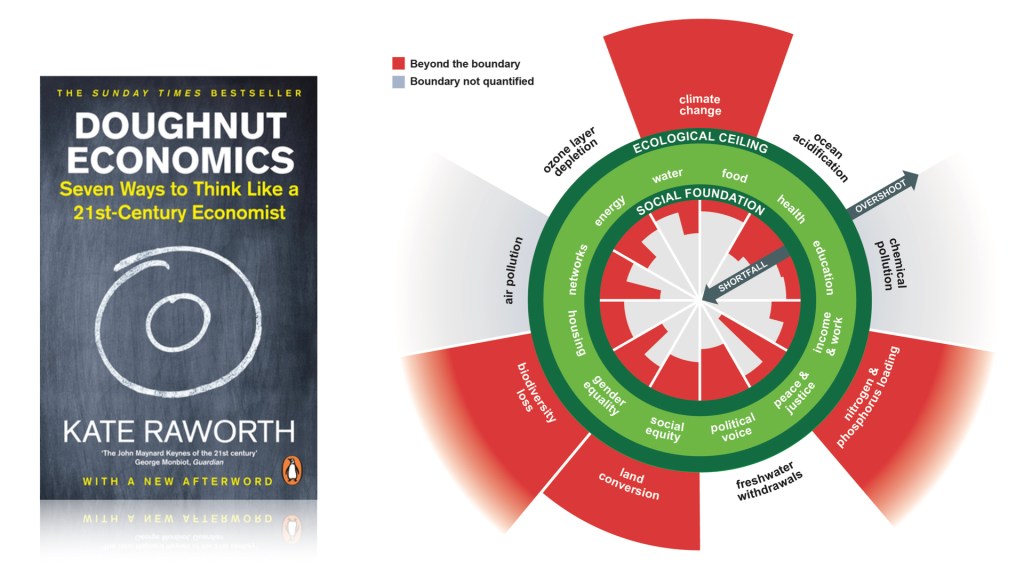
You have perhaps also heard of Kate Raworth’s notion of “Donut Economics”, looking to create systems that allow us exist in the ‘donut’ space between an equitable social foundation and an ecological ceiling.
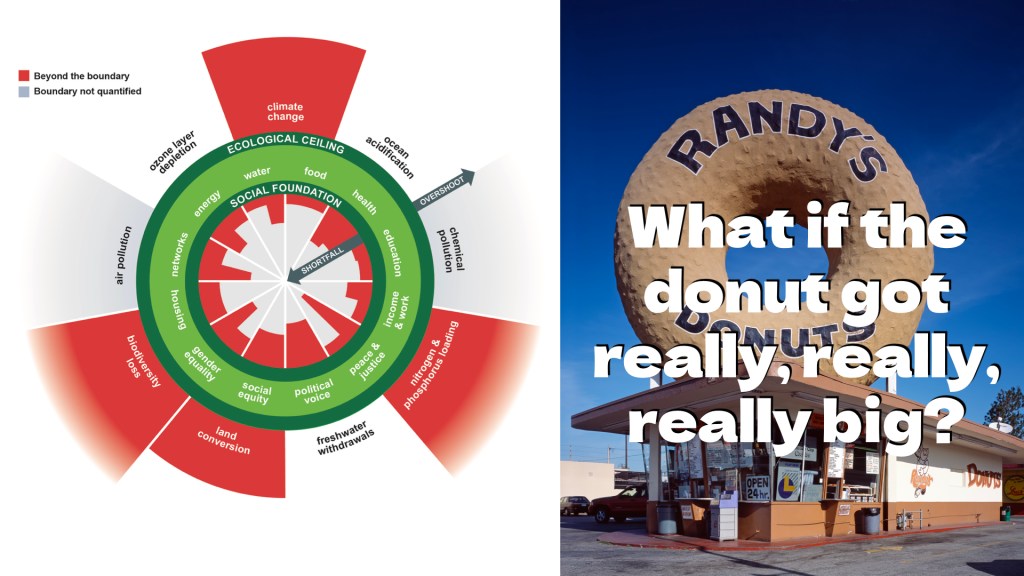
But – when I read this (and to be clear I’m a fan) I thought back to my science fiction, and the Kardashev scale of energy.
Because one aspect of the donut is not like the others.
What if we could make the donut, really, really, really big?
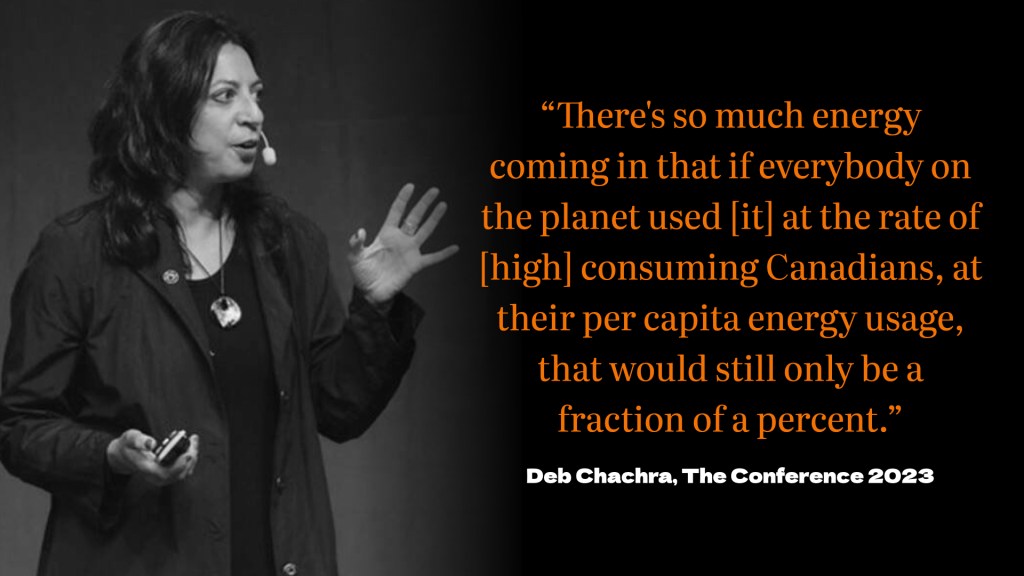
Deb Chachra at The Conference 2023…
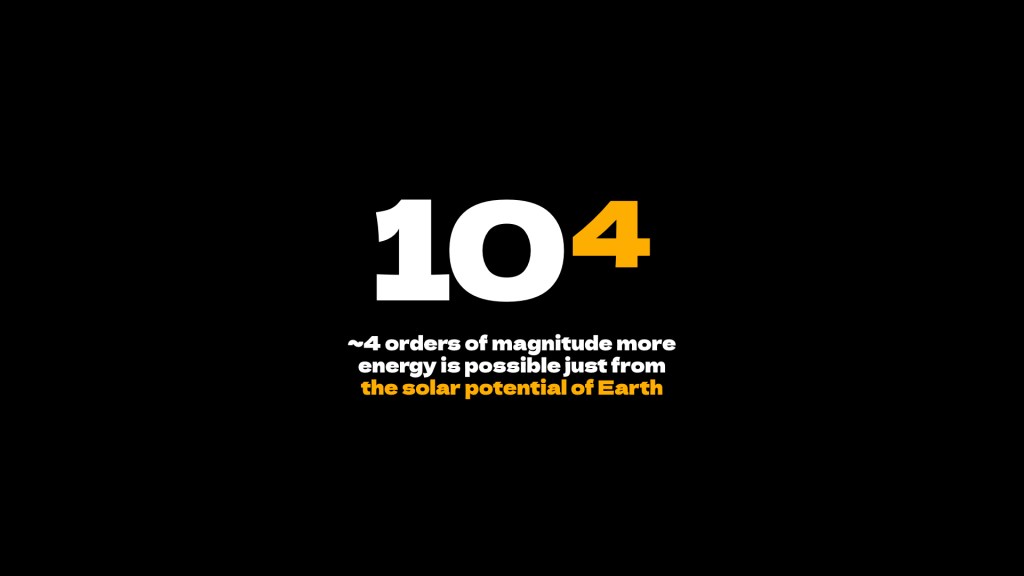
The thing that keeps going around in my head is that ~4 orders of magnitude more energy is possible just from the solar potential of Earth.
That’s true Type-1 Kardashev living for us.
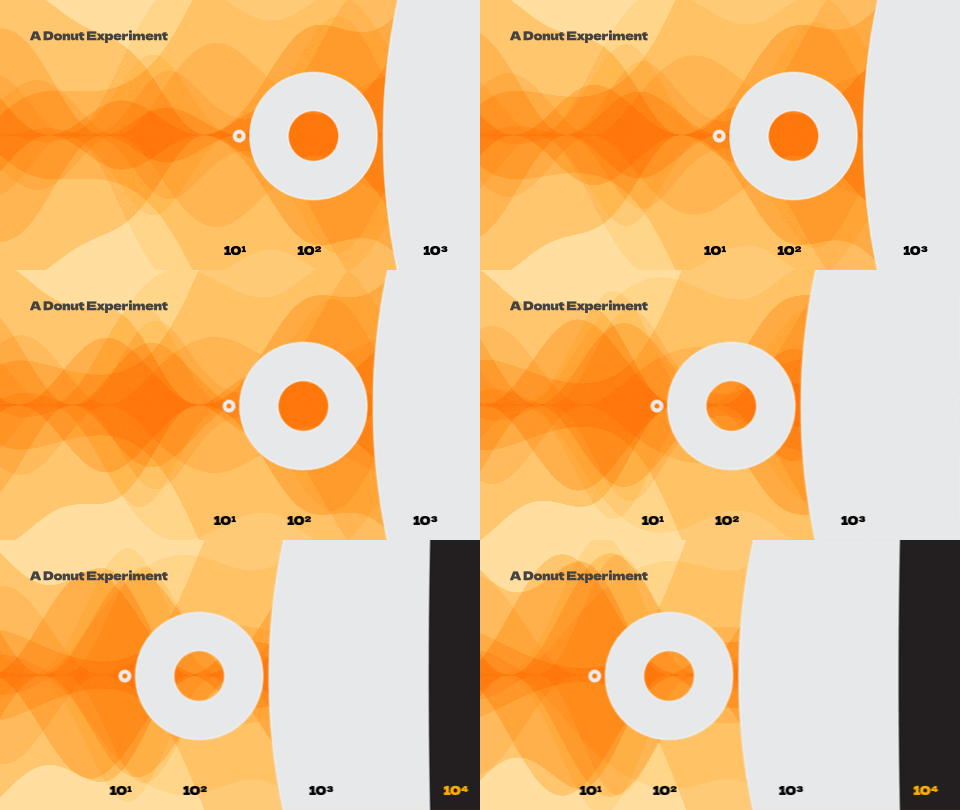
To try and illustrate that – here’s a little donut visualization experiment for you.
There’s a 10^1 donut, a 10^2 and so on.
The edge of the 10^4 donut is like a straight edge on this slide. It’s so big you can’t see the curvature!

If we zoom out so we can see the 10^4 Kardashev type 1 donut, then we can just about see the 10^2 donut.
Where we are now in terms of energy usage is invisible!

So…
…this possibility haunts me.
I don’t want to discount all the other challenges and constraints on continued life on earth…
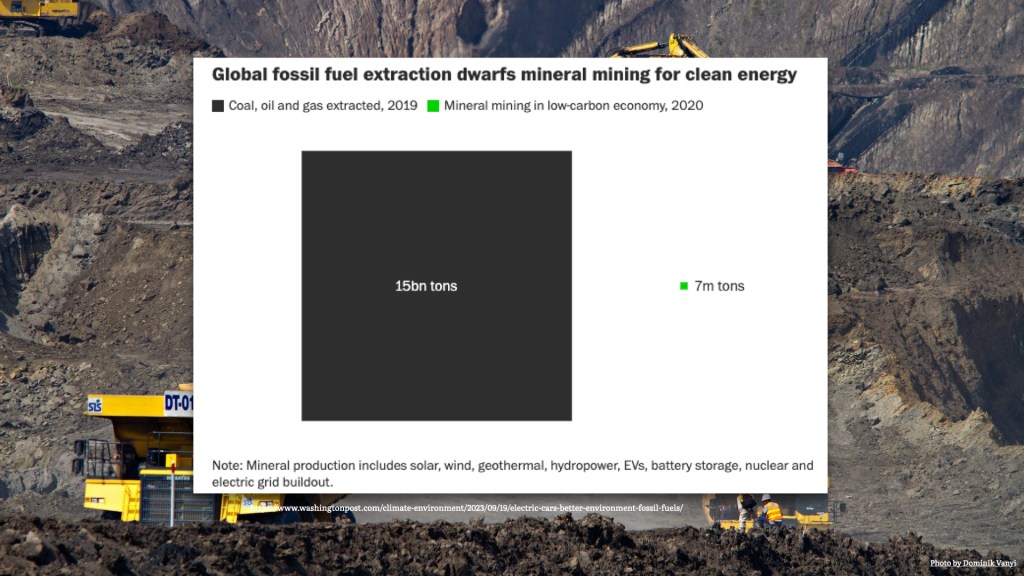
And I certainly don’t discount the extractive and embodied energy impacts of solar/battery technology
Although it’s way, way better IMHO than digging up stuff just to burn it.
According to the WaPo: “In a scenario limiting global warming to 2 degrees Celsius, the IEA estimates the amount of critical minerals needed would be roughly 500 times less in terms of volume than today’s fossil fuel extraction.”
[<a href="https://www.distilled.earth/p/a-fossil-fuel-economy-requires-535x https://www.distilled.earth/p/a-fossil-fuel-economy-requires-535x <- another very good visualisation]
But.
What if?
What if?
What could we do with all that energy?
What might it let us do about all the other things we need to fix within the donut?
So with that in mind, back to where we are right now on our journey to being a Kardashev Type-1 civilisation.
Specifically, something I’ve been working on for the last 2.5yrs since leaving Google at the end of 2021.
I’ve been working in the realm of energy transition, at a company called Lunar Energy.
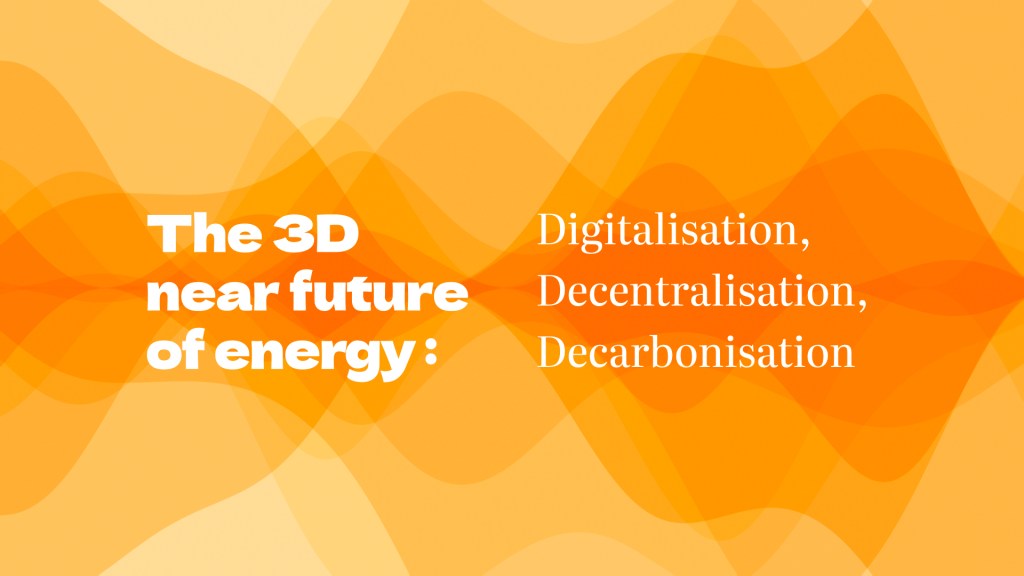
It’s founded on a belief in a “3D” future for energy – Digitalisation, Decentralisation and Decarbonisation.
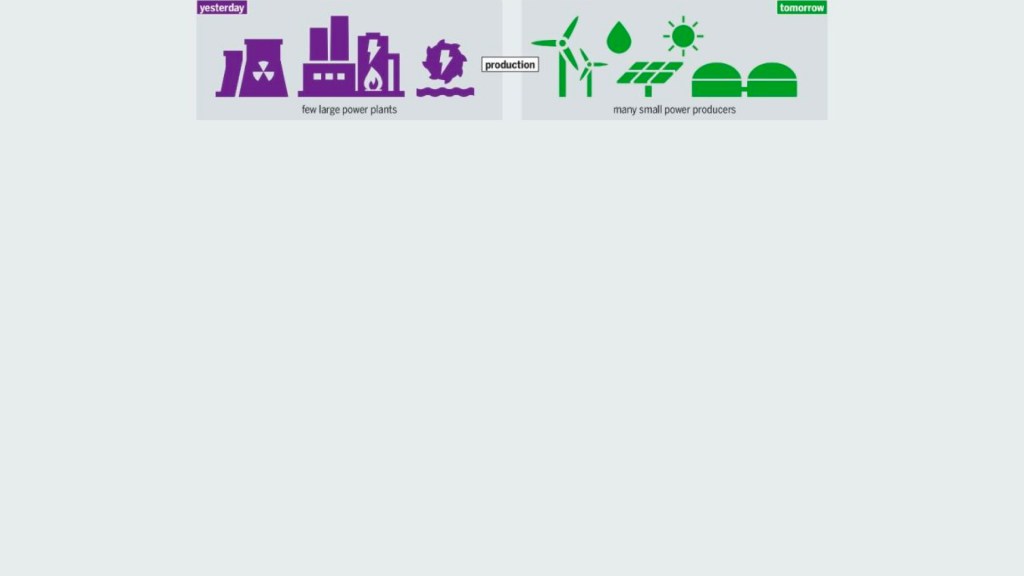
This graphic from the Economist is one of the more useful overviews of the 3D near-future.
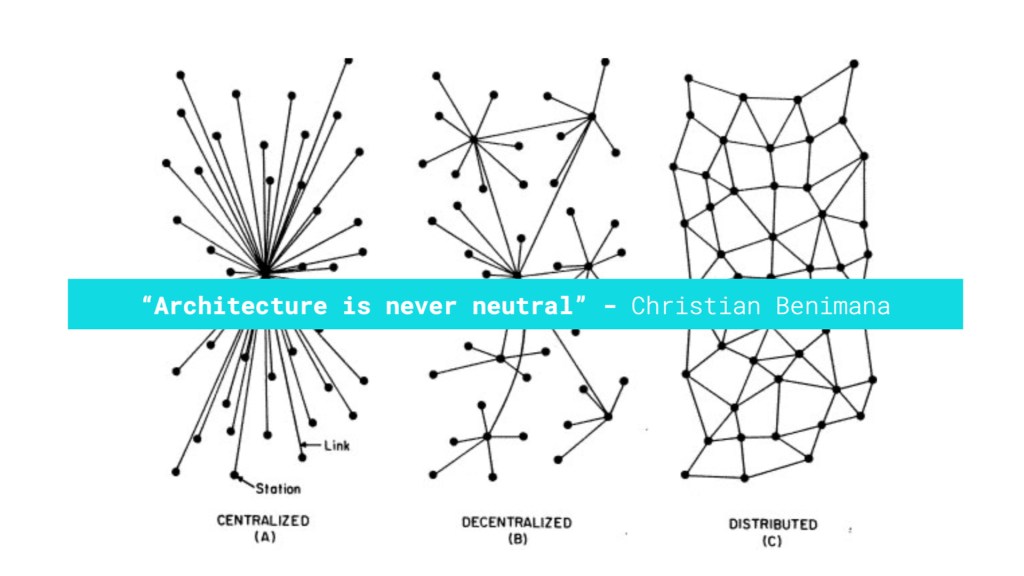
It shows the juxtaposition of the top-down, fossil fuel driven model of having few large producers of energy to a future of many, smaller producers…
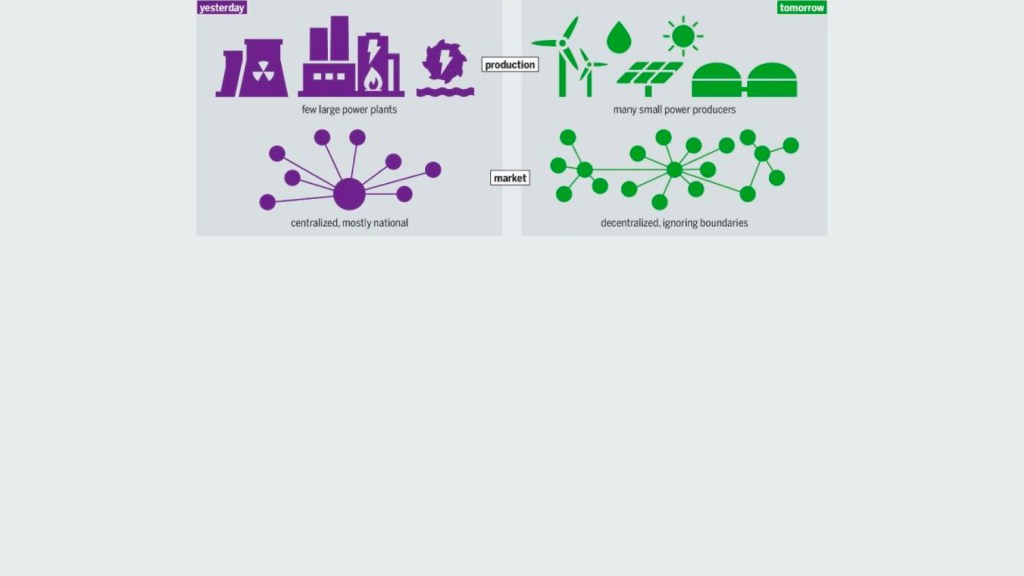
A juxtaposition with the decentralized architecture of this new grid…
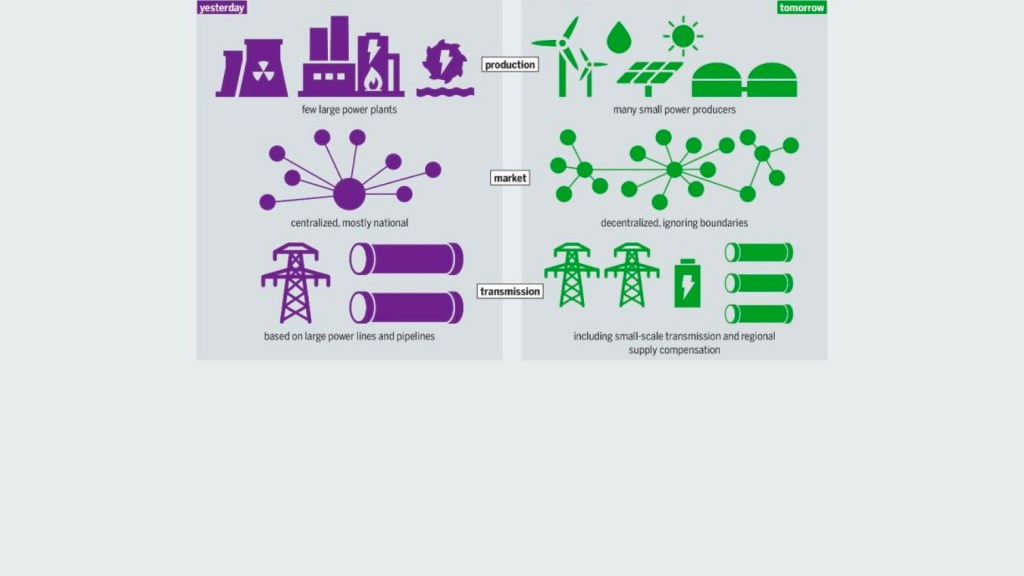
That will be more local and lighter in its nature…
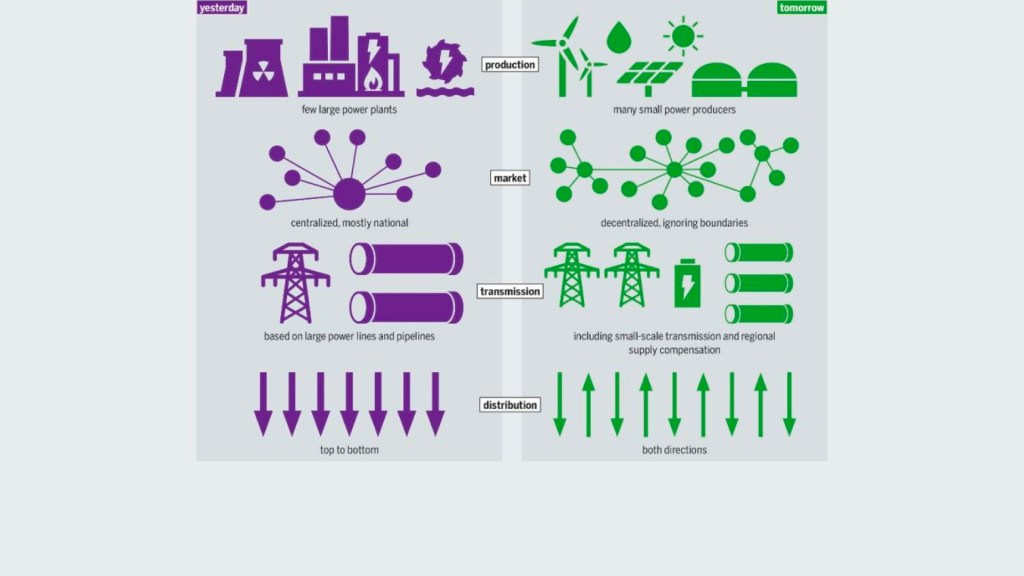
Bi-directional…
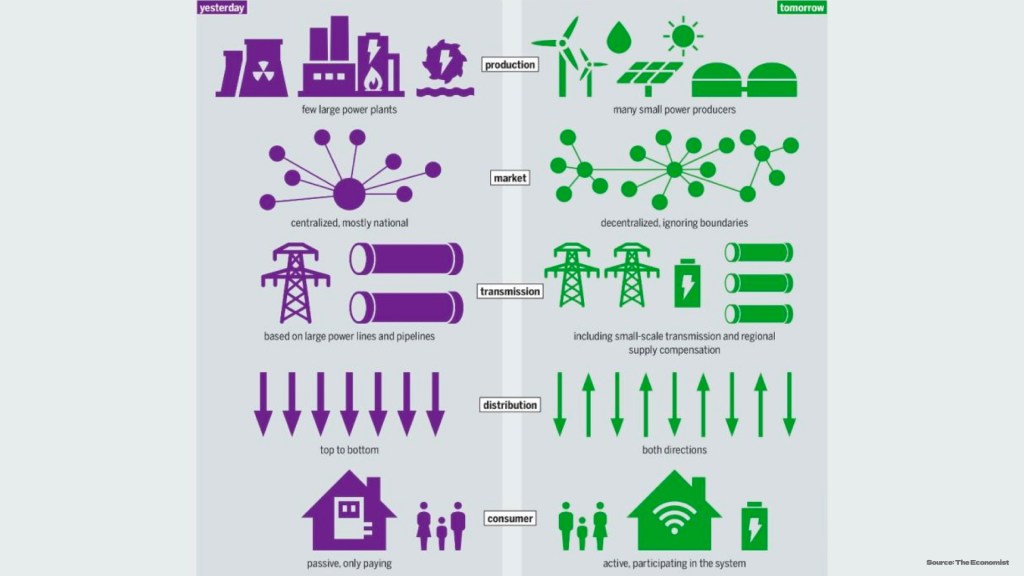
And create active, productive participation in energy generation over passive consumption.
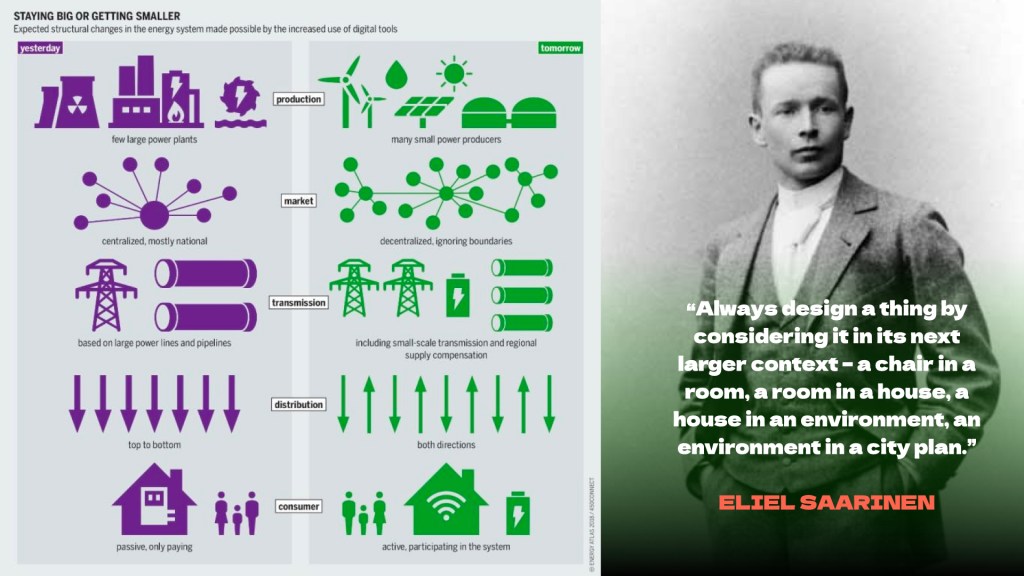
This is incredibly appealing to me – not only as someone who felt the same way when they discovered the architectural principles that made the internet, but also someone who trained as an architect.
The Saarinen quote becomes the basis of this energy revolution also.
Lunar Energy’s main product is an example building block of this new grid.
A solar energy battery storage system – designed to make it simple to power your home using the near-endless energy of the Sun.
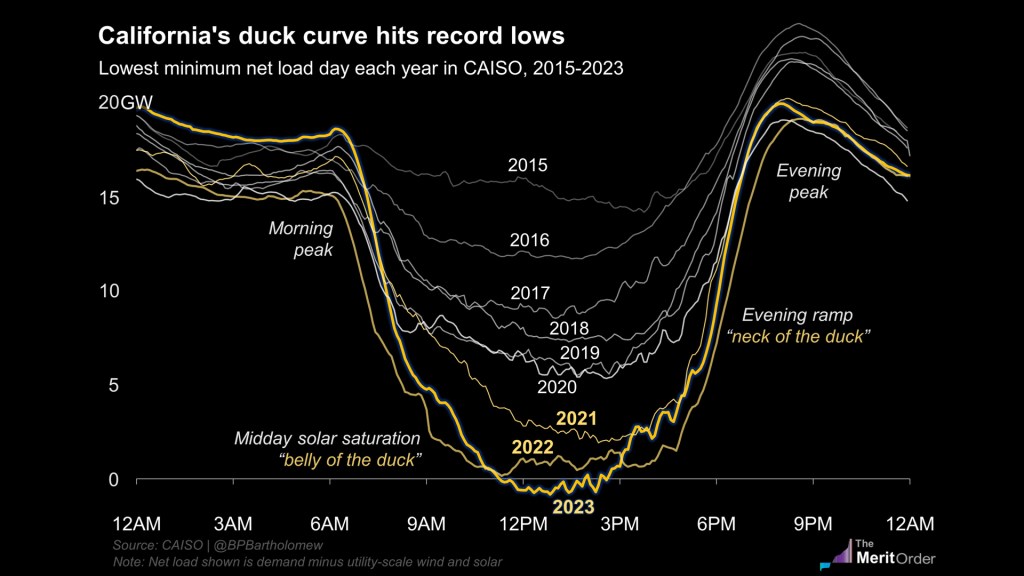
Because storage and software are the missing key to unlocking that solar endowment we talked about.
This is what gets called the ‘duck curve’ – the reason the belly of the duck gets lower year on year is the amount of solar production that is being added, creating tons of energy in the middle of the day.
But as you can see – the neck and head of the duck in the evening is where we want to use it.
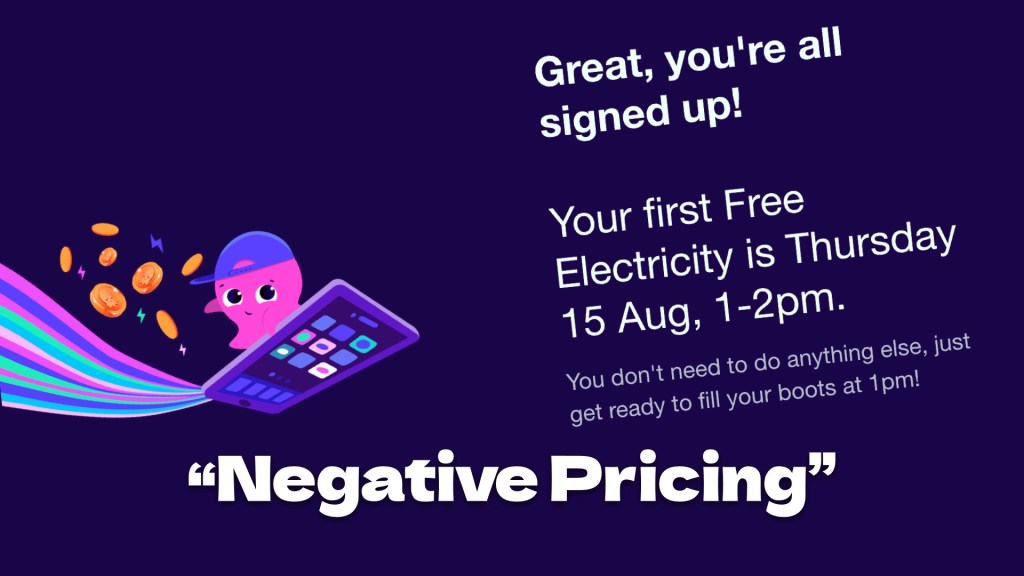
I was recently offered free electricity in the middle of the day [the belly of the duck] by my utility in the UK – this abundance is viewed as a huge issue, and called, wonderfully, ‘negative pricing’!
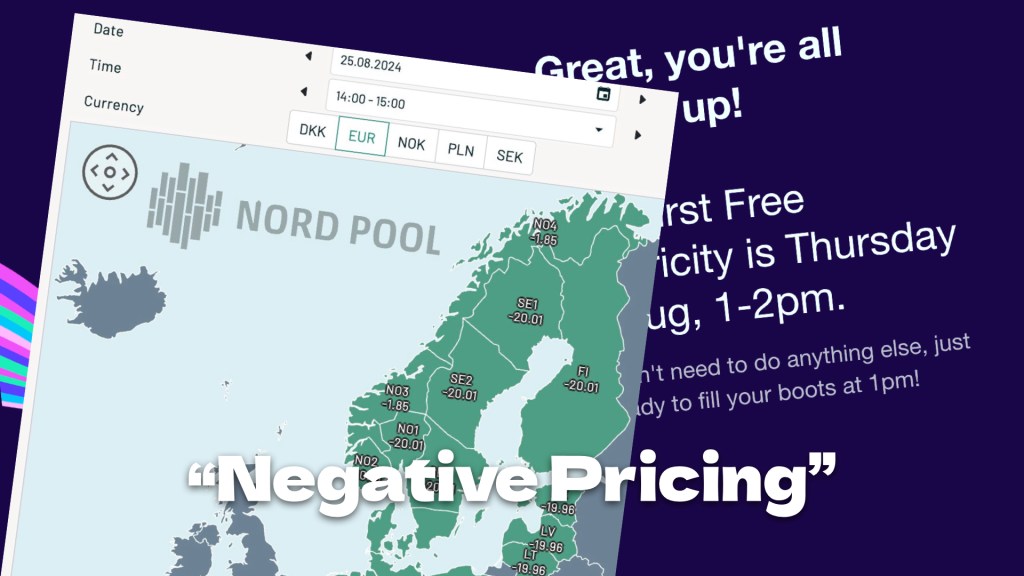
Incidentally this past weekend was sunny and windy across the EU, leading to “negative prices” everywhere…
Storage and software can time shift energy from when it’s produced to when it’s needed.
Here’s a visualization (and sonification by my old BERG colleague Tom Armitage) of the Sun’s energy being stored in batteries around the California bay area during the day time and released as a coordinated, time shifted fleet in the evening.
By aggregating these individual batteries in a network they can show up to the traditional grid as something resembling a fossil fuel power station, helping to replace them.
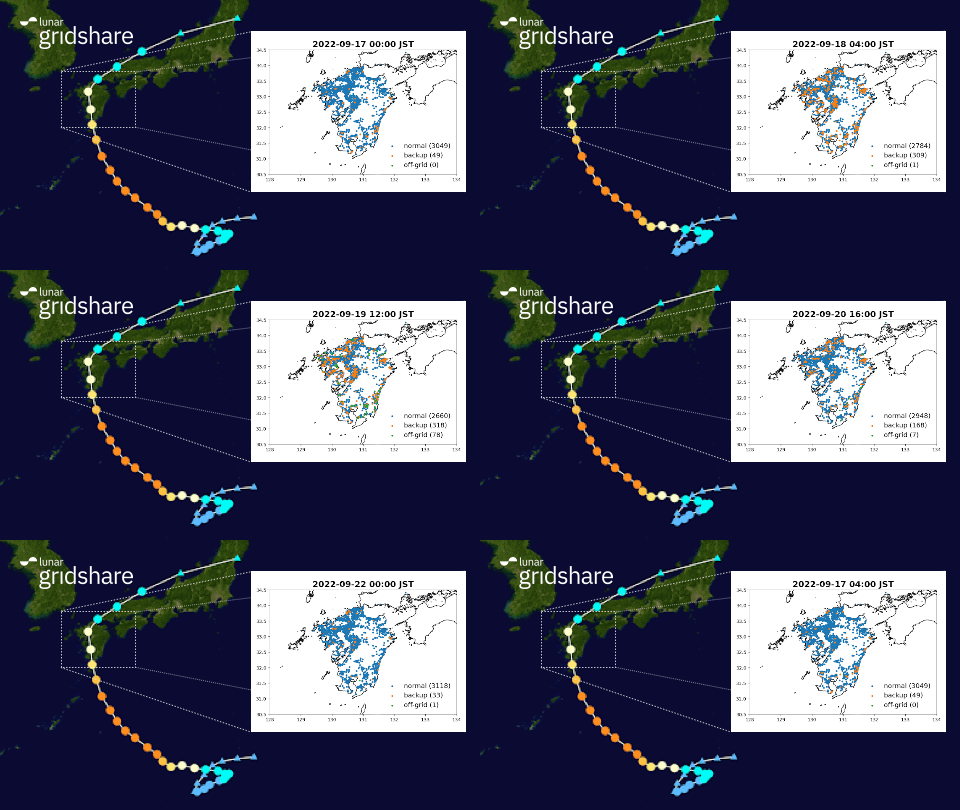
And here is an example I think is really powerful: a 2022 typhoon warning in Japan where we have a large fleet of batteries controlled by the Gridshare platform.
You can perhaps see in the time-series plot the battery sites ‘anticipating’ the approach of the typhoon and making sure they are charged to provide effective backup to the grid.
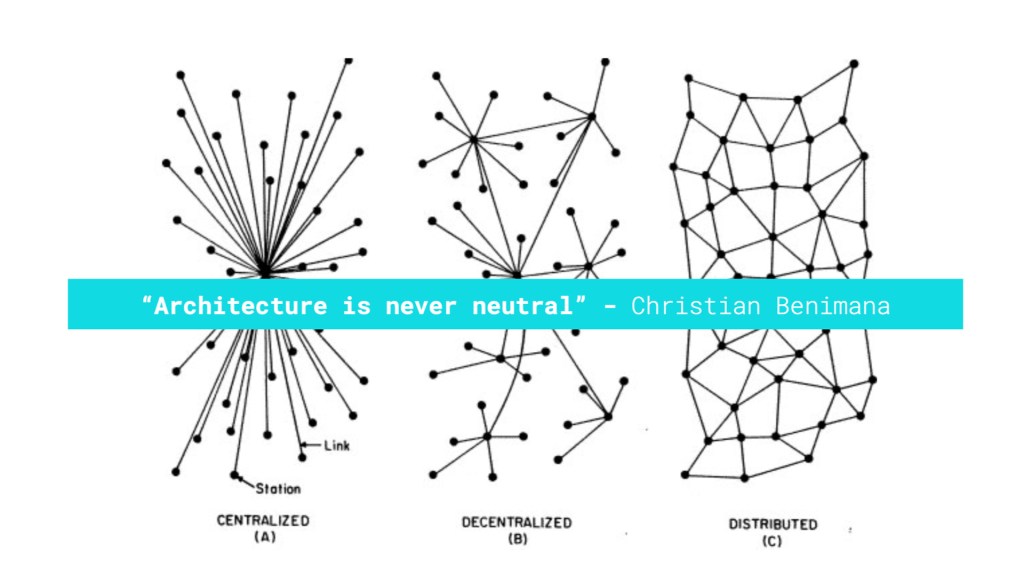
This new bottom-up grid resembles other resilient grids we have built…
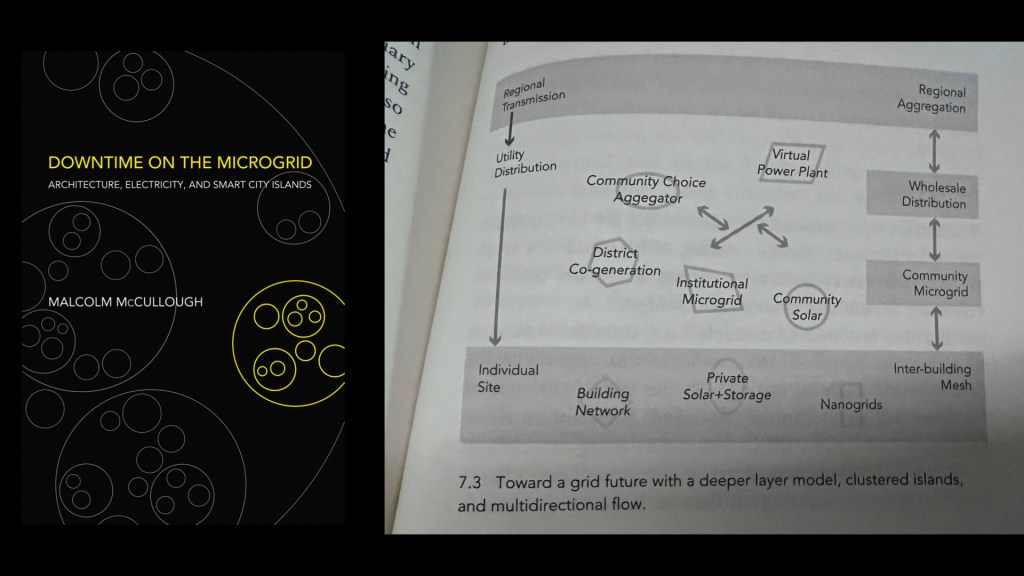
Malcolm McCullough’s 2020 book “Downtime on the microgrid” advocates for this bottom-up grid beautifully.
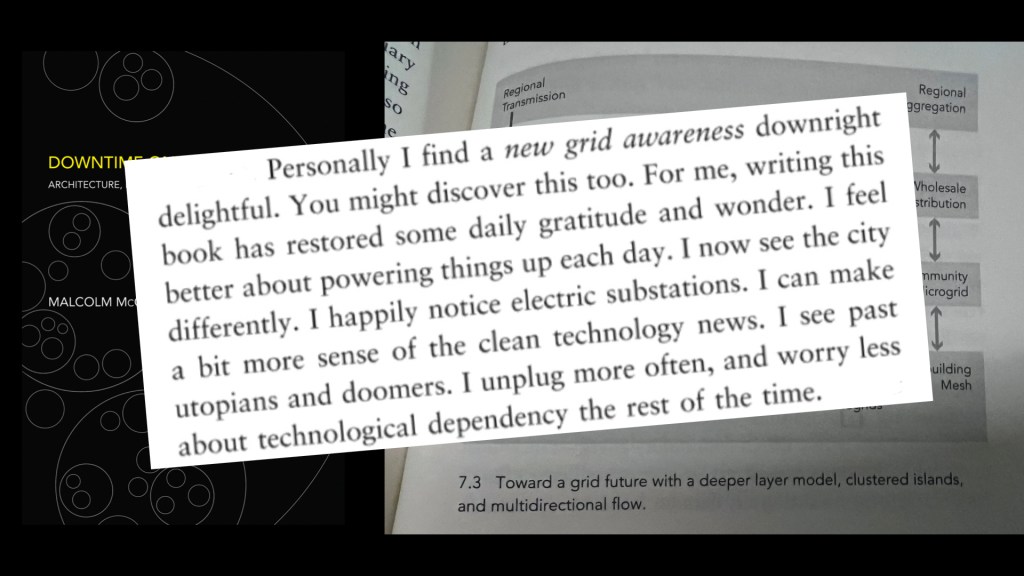
This passage points out the feeling of ownership and legibility it can promote over previously invisible infrastructures of power generation and distribution.
And I think it’s that legibility, that “electroregionalism” I’m interested in.
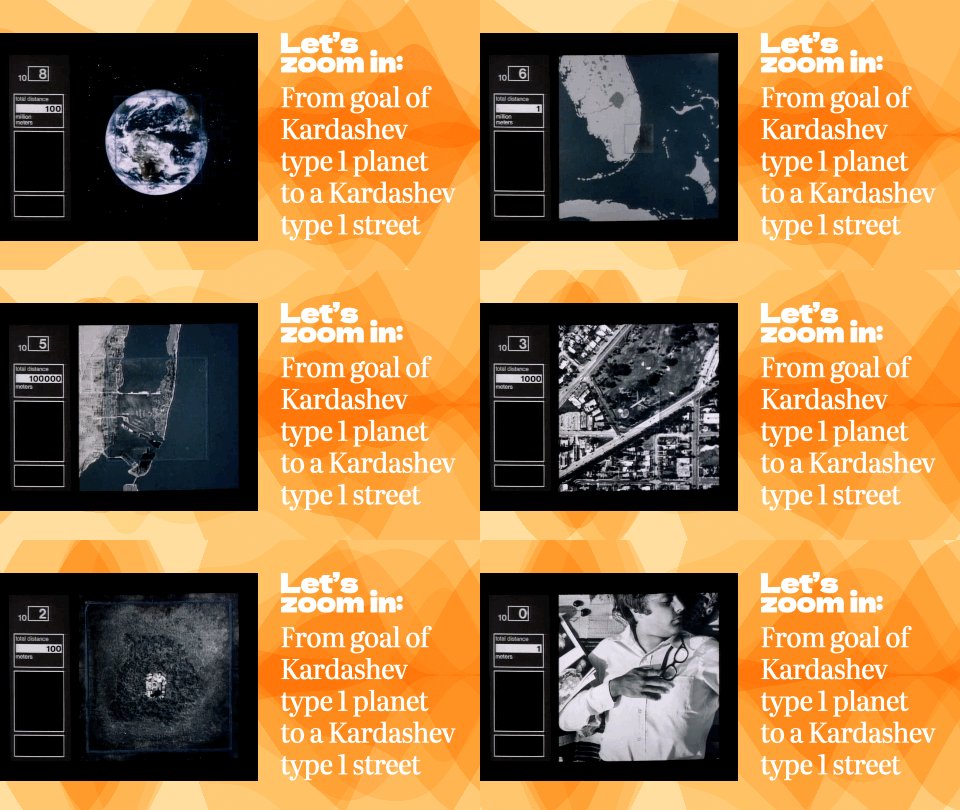
Let’s zoom in from the planetary now.
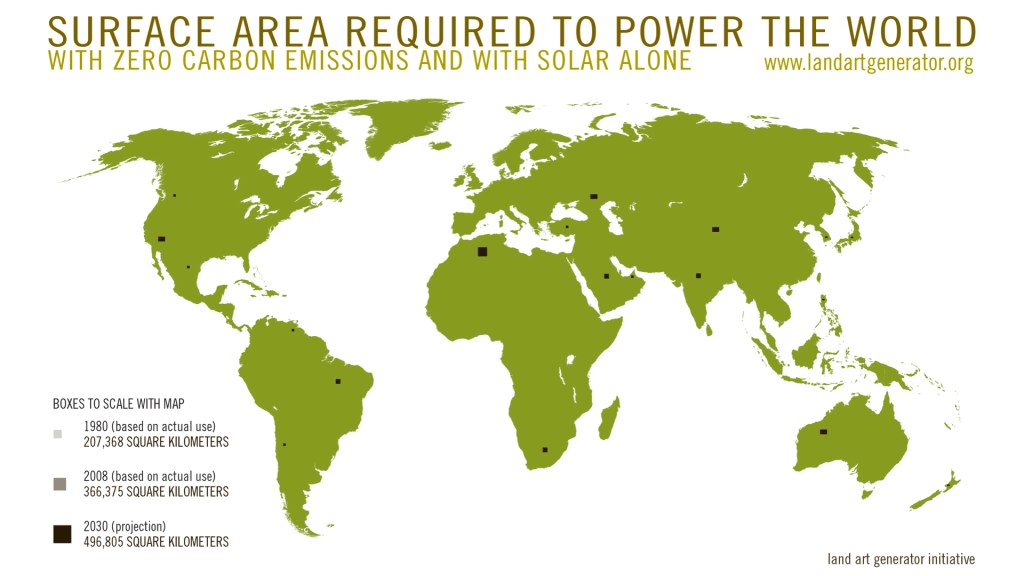
Because the other thing that I think is so interesting about what is happening is that power generation for the planet might not be in remote locations…
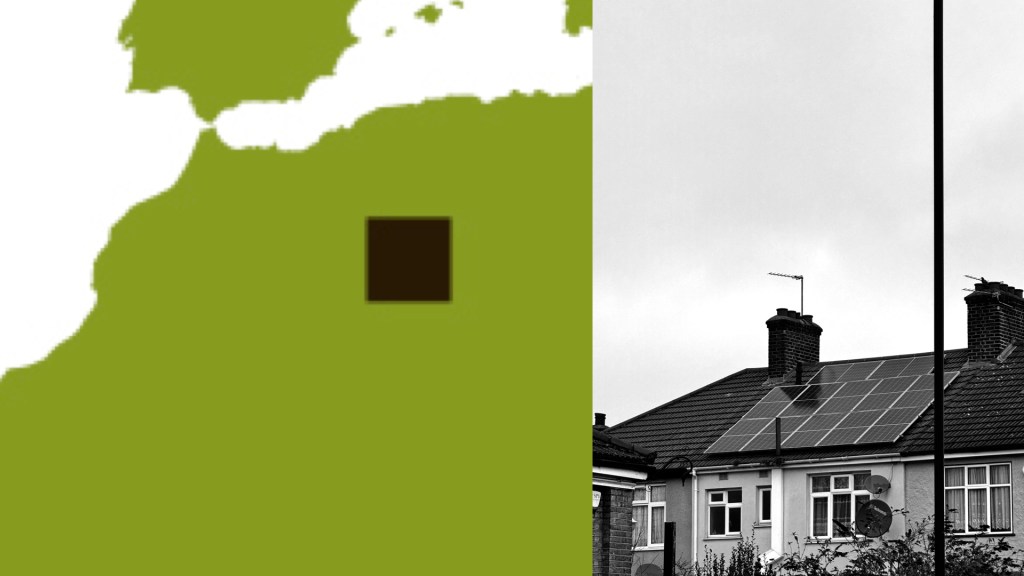
…away from our daily lives.
It is on our rooftops, where we live.
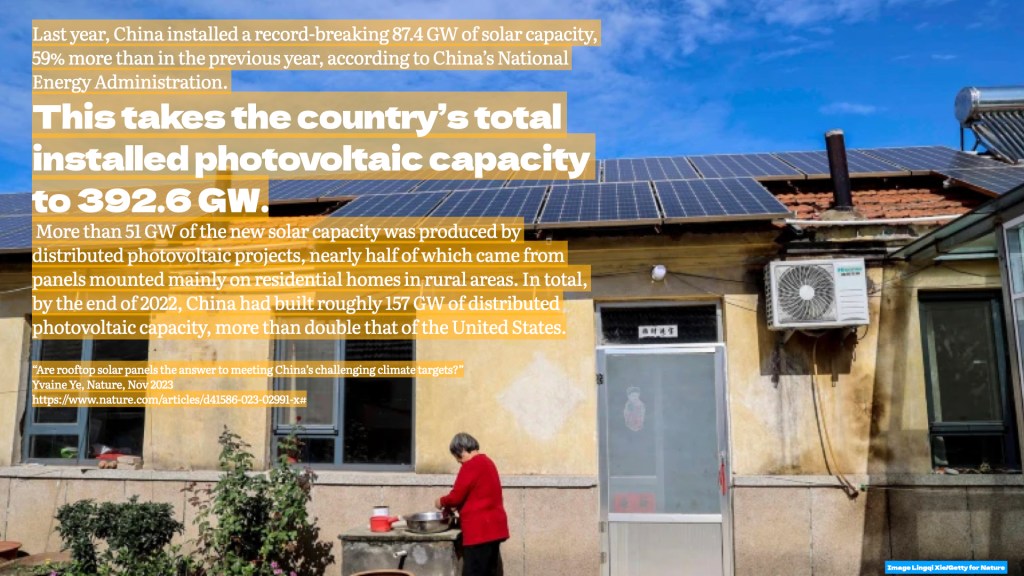
And it’s an astonishing resource.
Here is a report from Nature at the end of last year showcasing China’s push into rural residential rooftop solar.
Impressive numbers – but seemingly a top-down initiative.
I’m more interested in creating bottom-up architectures of participation in energy production, distribution and use.
Something more like the “World of Ends” of the internet as described by Doc Searls and David Weinberger – “No one owns it / Everyone can use it / Anyone can improve it”
And not offgrid isolation, or rugged individualism as solar/battery is marketed in the USA. How do we make it easy to actively make our own grids.
To make a Kardashev Type-1 world, I believe we need to make Kardashev Streets.
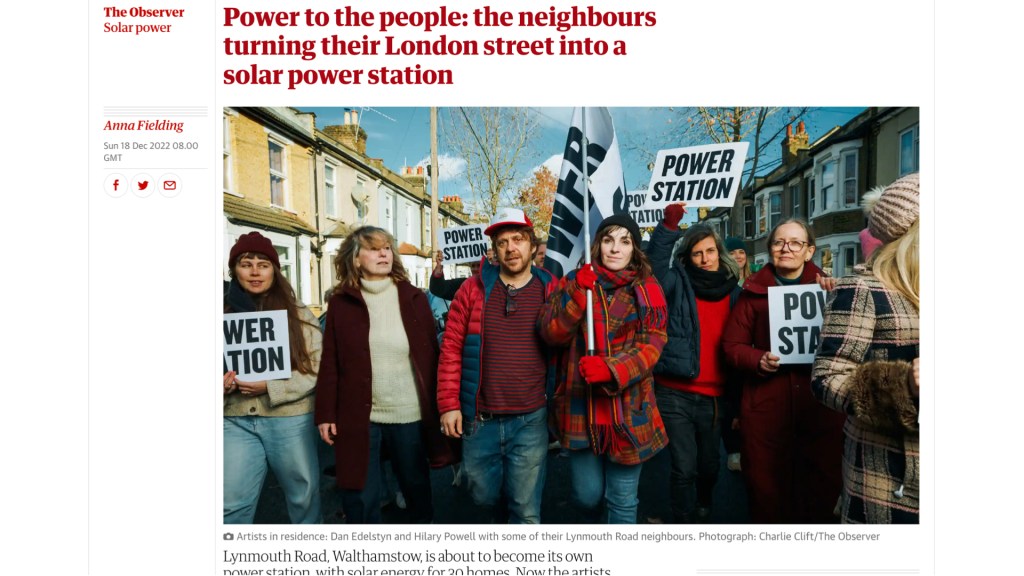
Pictured here is perhaps a prototype of just that – Lynmouth Road in NE London where the residents are campaigning to become their own power station…
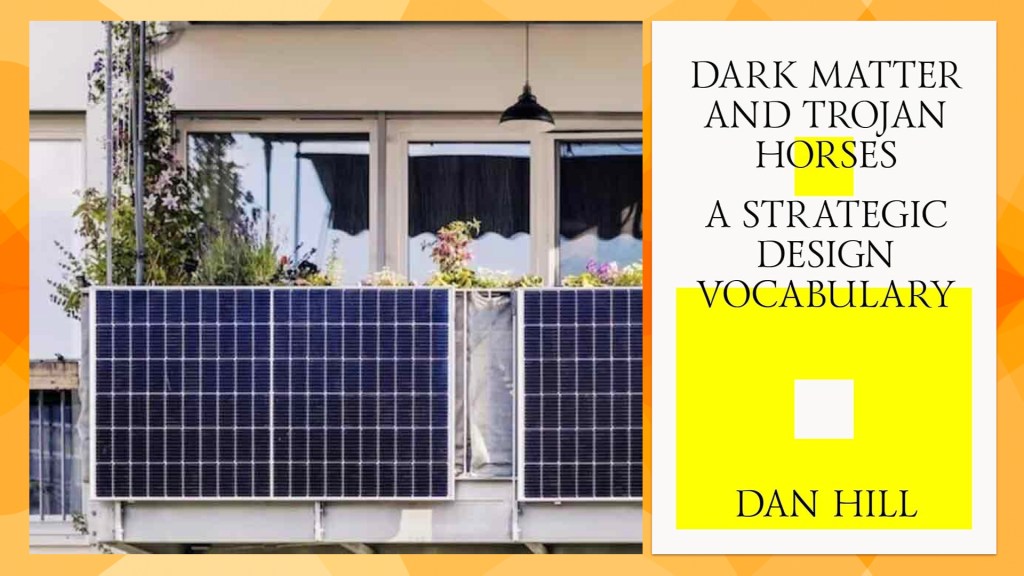
You maybe be familiar with Balcony Solar or Balkonkraftwerk!
Here the solar/battery HW is traveling from the direction of camping and hiking to the home.
German authorities recently changed regulations so that Balcony Solar setups can contribute back to the grid through nothing more complex than home electrical outlets.
This is the sort of ‘dark matter’ that Dan Hill has written about in terms of strategic design challenges.
How might we work on the service and strategic design challenges to enabling Kardashev Streets?
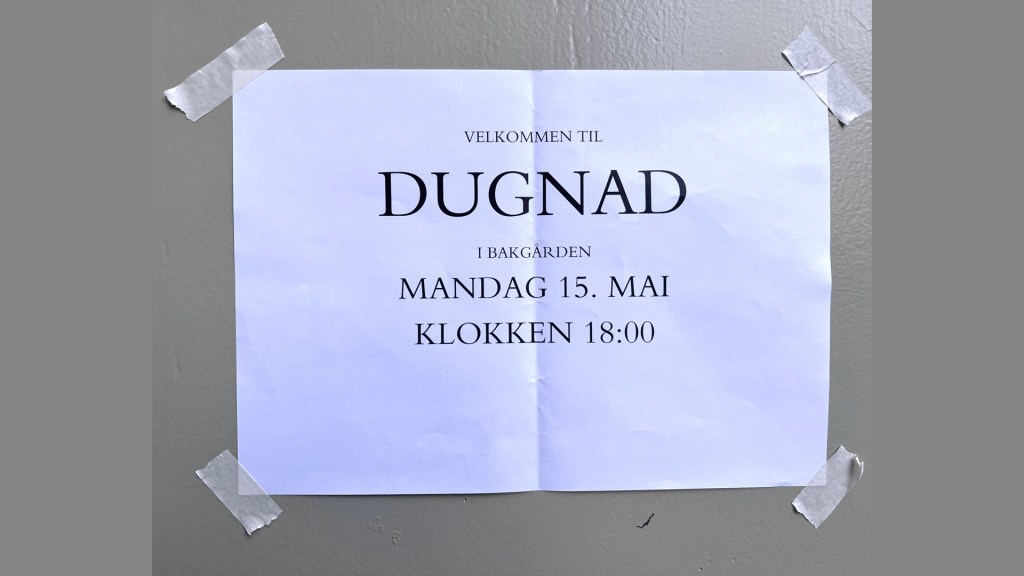
What are the institutions at municipal level but also social rituals that might create and crucially – maintain – Kardashev Streets?
“Dugnad” season in Norway, Talkoot in Finland, Harambee in Kenya… Could there be extensions of existing traditions or new ones to invent?
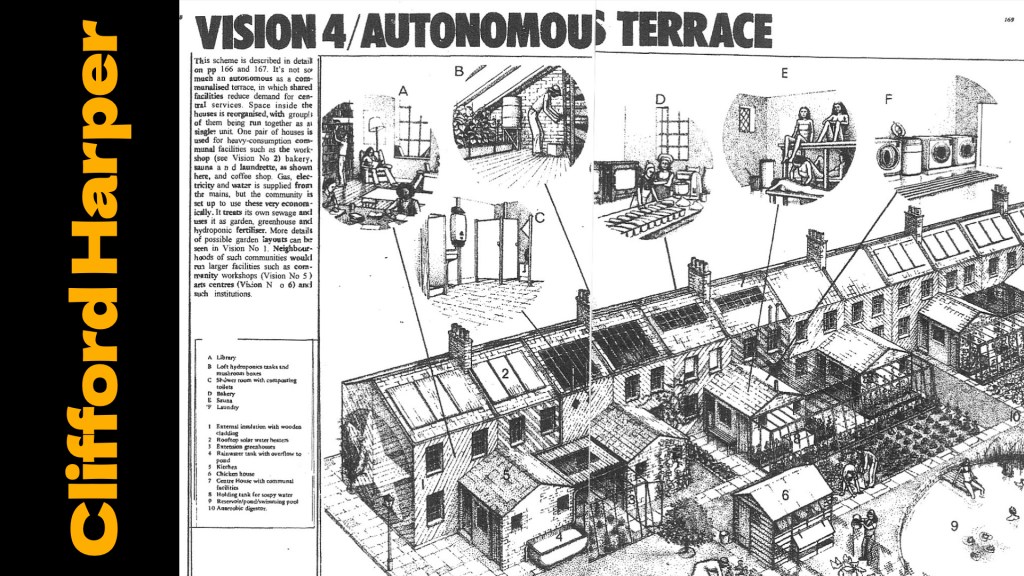
Finally – Here’s Clifford Harper’s illustrations of ‘the autonomous terrace’ from his 1974 book “Radical Technology” – workshops, saunas, greenhouses, solar.
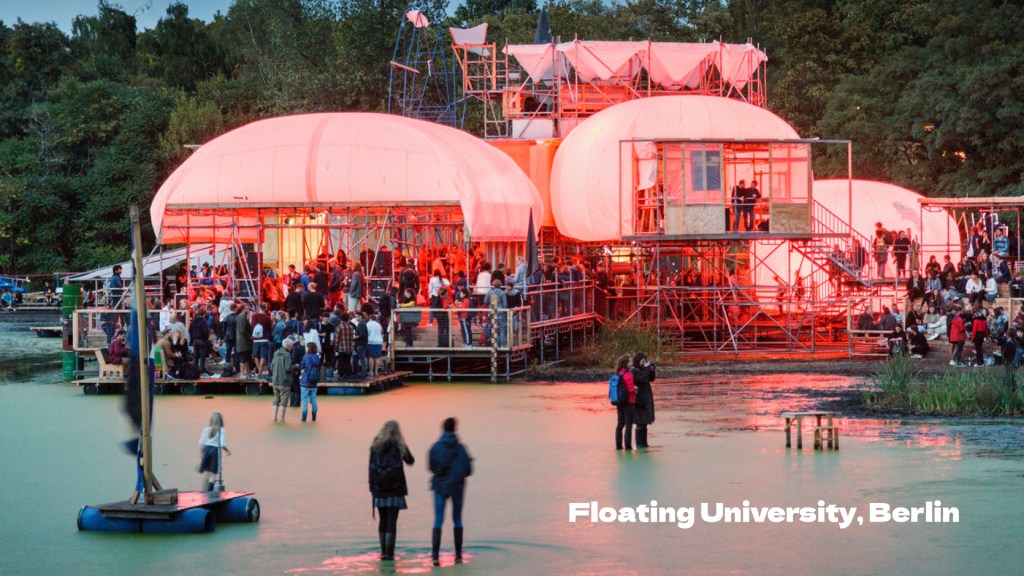
And here’s perhaps the up-to-date version – the beautiful Floating University in Berlin.

And I think that’s also what’s missing – envisioning how much better this could be, at street level, and in the every day.
So far – this has been done best (for me) not by Hollywood or Big tech… but by a yogurt company…
 Kardashev Street
Leave a comment